
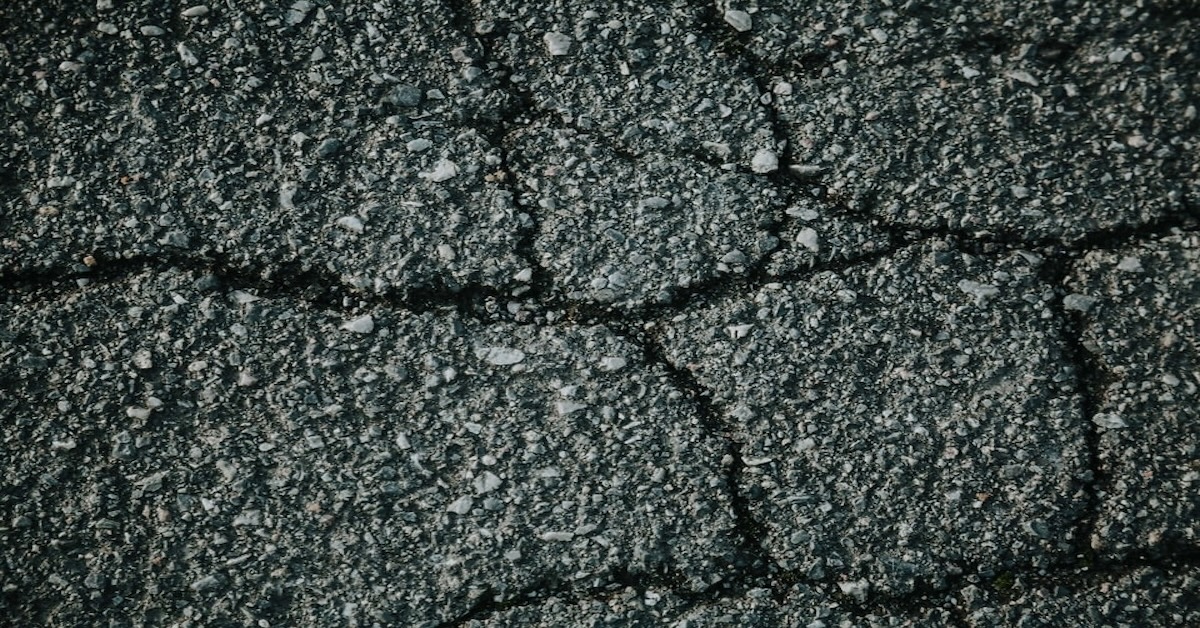
If you drive in Brisbane, you know potholes have become part of the daily routine. Rain, heat and heavy traffic wear down the surface year after year, and the problem has proven stubbornly persistent. The issue isn’t new: during the 2021–2022 period, Moorooka News recorded 1,164 potholes repaired in Moorooka, and Brisbane averaging 35 pothole repairs per day overall. The Gap Today documented 2,653 potholes filled in The Gap after the 2022 floods. And this year, Sunnybank Hills News reported a 118 per cent surge in community-reported pothole complaints, with Acacia Ridge among the worst-hit. For many drivers, it feels like Brisbane fixes one crater only for another to appear a short distance away. It has become a perennial headache for motorists and road crews alike.
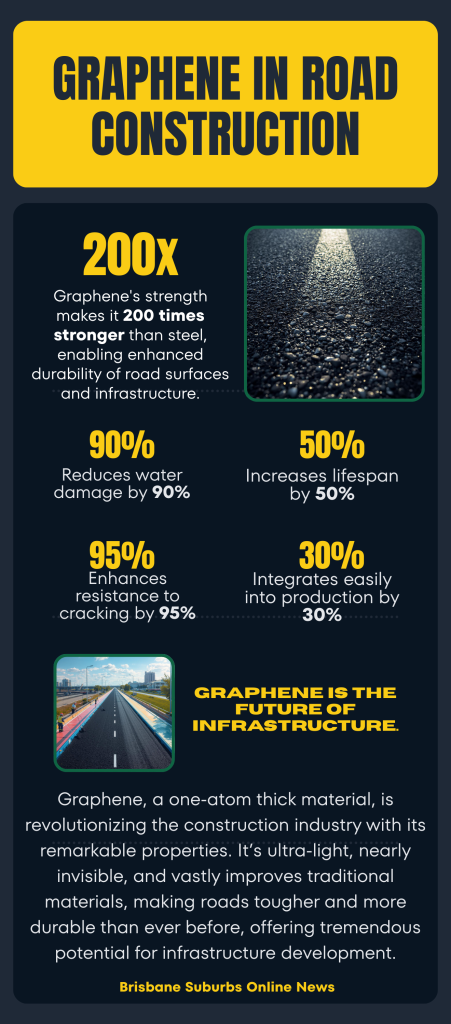
Against that backdrop, a breakthrough in road materials overseas has caught the attention of engineers: graphene. The material has long been described as a “wonder substance” — so much so that on the radio, Macca joked that if a salesman claimed it could improve batteries, electronics, aircraft and roads, you might think he was running an old-fashioned travelling sideshow. But the science behind graphene is solid. It is a one-atom-thick sheet of carbon arranged in a honeycomb structure, exceptionally strong, lightweight and highly conductive. When mixed into asphalt, it strengthens the bond that holds the stones together, making the surface more resistant to cracking, water penetration and the early failures that turn into potholes.
The UK Experience
The United Kingdom has produced some of the most advanced real-world trials of graphene asphalt. In one trial, engineers resurfaced a lane using a graphene-enhanced asphalt known as Gipave, laying a control lane beside it. After several years of normal traffic, laboratory tests showed improved stiffness and better water resistance compared with the conventional lane — both important indicators of how well a road will resist cracking and pothole formation.
A second trial, regarded as a world first, involved building the entrance road to Flatts Lane Country Park in Teesside. More than 150 tonnes of asphalt were mixed with Universal Matter’s Genable Pavement additive at Tarmac’s Coxhoe asphalt plant and laid using standard construction processes. This marked the first full public road using the graphene-modified mix, following earlier controlled tests in the US and Canada.
The UK has strong motivation for innovation. Pothole-related vehicle damage has cost motorists hundreds of millions of pounds in recent years, and the broader economic impact is significant. While the trials are still young and engineers continue to monitor the long-term behaviour of these surfaces, the early signs suggest graphene could offer tougher, longer-lasting roads.
Why This Matters for Brisbane
BRISBANE’S POTHOLE REALITY
Brisbane’s roads take a beating. Heavy rain, stormwater runoff, flooding, high temperatures and rapid growth combine to create perfect conditions for potholes. In Moorooka, more than a thousand potholes were recorded in just six months. In The Gap, more than two thousand potholes were repaired in the six months following the 2022 floods. Across the city, crews routinely fill dozens of potholes per day after significant rain.
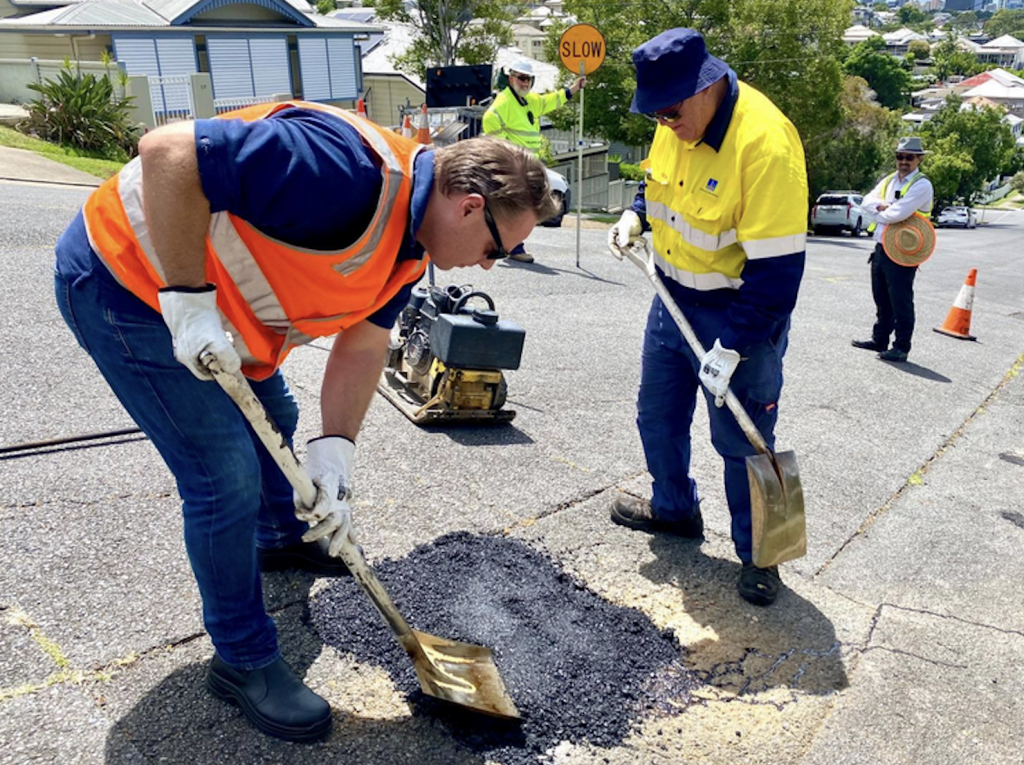
Photo Credit: Moorooka News
WHY OUR ROADS FAIL
Road surfaces fail through a predictable sequence. Cracks form due to heat, traffic loads and general ageing. Water enters those cracks during storms. Once water reaches the base layer, it weakens the foundation, and the asphalt collapses into a pothole. Brisbane’s subtropical downpours accelerate all four stages, turning small cracks into large failures quickly.
HOW GRAPHENE COULD HELP
Graphene-enhanced asphalt targets the weaknesses in Brisbane’s road network. It strengthens the bitumen binder so the aggregate stays locked together, resists cracking during heatwaves and heavy traffic, improves water resistance, extends road life and reduces the frequency of pothole formation. In short, it helps asphalt cope with the exact environmental pressures Brisbane is known for.
IDEAL PLACES FOR A BRISBANE PILOT
Some corridors are especially suited for a graphene trial: roads repeatedly damaged after rainfall, flood-affected areas such as Moorooka, Rocklea and The Gap, industrial zones with high truck movements, and steep or high-drainage streets where water undermines the base. Testing graphene on these stretches would provide meaningful, climate-specific data.
WHAT BRISBANE COULD GAIN
A successful trial could lead to fewer road closures, fewer emergency patch jobs, lower long-term maintenance costs and smoother commutes. Motorists would benefit from fewer tyre and suspension repairs, and the city could shift from constant reactive patching to a longer-term maintenance model.
The Takeaway
Brisbane’s road problems are not just surface issues. They stem from the interaction of climate, geography and traffic. Graphene-enhanced asphalt addresses these vulnerabilities at the material level and may offer a long-term fix rather than another cycle of patch-and-repair. For a city where potholes have become a recurring frustration, the potential benefits are too promising to ignore.
Published 28-Nov-2025
Featured Image Credit: Pixnio/Drazen Nesic
